The line separating cryptocurrency markets from Wall Street is becoming increasingly difficult to see.
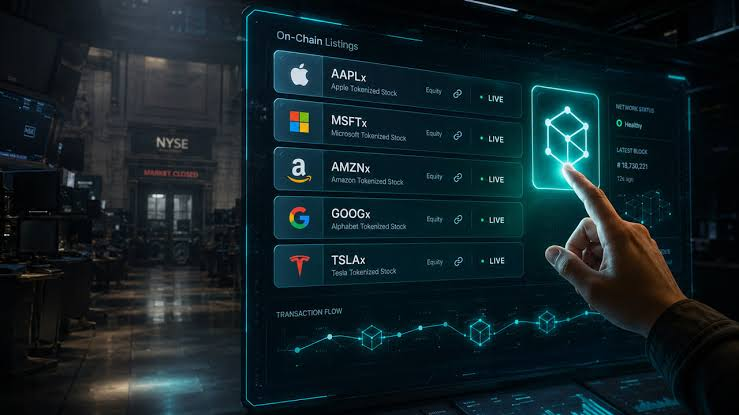
The US Securities and Exchange Commission has introduced a five-year conditional regulatory exemption that allows qualifying platforms to experiment with trading tokenized versions of US-listed stocks using blockchain infrastructure. The decision creates one of the clearest regulatory pathways yet for bringing conventional equities onto distributed-ledger networks.
For cryptocurrency companies, the implications could be significant. Major platforms including Coinbase and Robinhood have expressed interest in tokenized equities, while traditional financial institutions are simultaneously developing their own blockchain infrastructure. Rather than crypto companies and Wall Street operating as entirely separate industries, both sides are increasingly competing over what the next generation of financial-market infrastructure will look like.
What Exactly Has the SEC Changed?
The SEC's new “Innovation Exemption” provides temporary and conditional relief for a new category of platform known as a Tokenized Securities Venue, or TSV. Qualifying venues can use permissioned automated market makers and liquidity pools to facilitate trading in certain tokenized National Market System stocks.
The exemption is scheduled to operate for five years, giving regulators an opportunity to observe how these markets function before deciding whether more permanent rules are appropriate. The SEC has also requested public feedback as it studies issues including market structure, transparency, investor protection and the operational performance of blockchain-based trading venues.
This is therefore not a blanket deregulation of tokenized stocks. Platforms relying on the exemption must meet specified conditions covering areas such as recordkeeping, transaction transparency, technology safeguards and coordination around trading stoppages.
What Is a Tokenized Stock?
A tokenized stock is a digital representation of an equity security recorded using blockchain technology. Instead of blockchain being used only for native crypto assets such as Bitcoin or Ether, it can also be used as infrastructure for ownership and trading of traditional financial assets.
But there is an important distinction between a genuine tokenized security and a synthetic token that merely follows a company's stock price.
Under the SEC framework, qualifying tokenized NMS stocks must provide holders with the same fundamental rights and privileges associated with the underlying conventional security, including dividend and voting rights. The framework does not provide the same pathway for synthetic products that simply mimic stock prices without conveying ownership rights.
That distinction is critical for investors.
Owning a digital token priced like a share of a company is not necessarily the same thing as owning an actual share in that company.
Companies Can Object to Their Shares Being Tokenized
The SEC has also included protections for public companies themselves.
Issuers must have an opportunity to object to having their securities traded through a Tokenized Securities Venue. If the issuer objects under the framework, the venue cannot simply proceed as though the company had no say in the process.
This provision could become important as tokenization expands because public companies may have different views about how their securities should trade on blockchain networks.
Some may see tokenization as an opportunity to reach additional investors and improve market efficiency. Others may have concerns about liquidity fragmentation, compliance, cybersecurity or the way blockchain trading could interact with established exchanges.
Why Coinbase and Robinhood Matter
The regulatory change arrives as large consumer-facing financial platforms are exploring how tokenized securities could fit into their businesses.
Reuters reported that companies including Coinbase and Robinhood have shown interest in the US tokenized-stock market. Their participation could make tokenized securities considerably more accessible to ordinary investors than earlier blockchain experiments aimed primarily at institutions.
The business opportunity is easy to understand. Cryptocurrency exchanges already operate digital trading infrastructure and serve customers accustomed to markets that remain open around the clock.
Adding genuine tokenized equities could eventually allow some platforms to offer cryptocurrency and conventional investments through increasingly similar technological systems.
That does not mean Coinbase or Robinhood automatically receives permission to list every US stock onchain. Each platform would still have to operate within applicable regulatory requirements and the conditions attached to the SEC's exemption.
Could Stocks Eventually Trade 24 Hours a Day?
One of the biggest search topics surrounding tokenized stocks is 24-hour stock trading.
Cryptocurrency markets operate continuously. Bitcoin does not stop trading because the New York Stock Exchange has closed for the evening, and investors can buy or sell crypto on weekends and holidays.
US equity markets operate differently, although extended-hours trading has expanded substantially.
The SEC held discussions on preparations for 24-hour trading on September 17, the same day it announced the tokenization exemption. That does not mean all US stocks are immediately moving to a 24/7 model, but it demonstrates that regulators are actively considering how longer trading hours could affect market infrastructure.
Blockchain could become one technological component of that transition.
Why Blockchain Could Change Stock Settlement
Buying a stock appears almost instantaneous to an investor. A button is pressed, an order is executed and the shares appear in an account.
Behind that simple experience is a much larger system involving brokers, exchanges, clearing organisations, custodians and settlement infrastructure.
Tokenization could potentially change some of those processes by allowing ownership records and transfers to operate through shared digital infrastructure.
SEC Commissioner Mark Uyeda said tokenization could modernize functions including issuance, trading, transfer, settlement and ownership records, potentially reducing costs while improving transparency and liquidity.
Those are potential benefits rather than guaranteed outcomes. The five-year experiment is partly designed to generate real-world evidence about whether blockchain markets can deliver them safely.
Automated Market Makers Could Enter Traditional Finance
One of the most interesting parts of the SEC framework is its treatment of automated market makers.
AMMs are familiar within decentralized finance. Instead of matching an individual buyer directly with an individual seller through a conventional order book, assets can be traded against pools of liquidity according to predefined mechanisms.
The SEC's exemption allows qualifying Tokenized Securities Venues to use permissioned AMM liquidity pools for tokenized stocks.
The word “permissioned” is important. This is not simply an unrestricted decentralized exchange model being copied directly into the US stock market. Access, transparency and regulatory conditions remain part of the framework.
Still, the idea that technology associated with DeFi could be tested within regulated US equity markets represents a substantial change in how blockchain is being considered by financial regulators.
Investors Could Gain Greater Transparency
Blockchain advocates frequently argue that distributed ledgers can improve transparency because transactions can be recorded in ways that are easier to audit and analyse.
The SEC is requiring participating venues to make specified US-dollar transaction information publicly available at regular intervals. That includes information relating to price, size, transaction time, pool addresses, daily volume and pool size.
The goal is to reduce information asymmetry while giving regulators and researchers enough data to evaluate how tokenized securities markets actually behave.
This information could become particularly valuable during the five-year experimental period because regulators will need evidence before deciding whether temporary exemptions should evolve into permanent rules.
The Timing Is Important for Crypto Regulation
The announcement came only two days after the US Senate failed to advance the sweeping Clarity Act.
The legislation was designed to establish a broader federal framework for cryptocurrency markets but received 50 votes in favour and 49 against, falling short of the 60 votes required to advance.
The immediate market reaction was negative. Bitcoin declined and shares of major crypto-related companies including Coinbase and Circle fell sharply following the Senate vote.
The SEC's subsequent tokenization decision demonstrates why the failure of legislation does not mean cryptocurrency policy in Washington has stopped moving.
Congress and financial regulators operate through different mechanisms. Even without a comprehensive new law, agencies can continue acting within their existing statutory authority.
Tokenization Could Become Bigger Than Crypto Trading
The long-term importance of tokenization may extend far beyond cryptocurrency speculation.
Stocks are only one category of asset that can potentially be represented through blockchain infrastructure. Bonds, investment funds and other financial instruments are also being explored for tokenization.
If that transition continues, blockchain's largest financial use case may eventually involve conventional assets rather than newly created cryptocurrencies.
That would represent a major change from the industry's early years.
The technology would become less visible to ordinary investors because blockchain could operate underneath familiar financial products rather than requiring consumers to think about wallets, tokens and decentralized applications every time they invest.
Traditional Brokers Could Face New Competition
Reuters noted that increased competition from tokenized-stock platforms could eventually affect established brokerage businesses.
If crypto-native platforms can provide regulated exposure to genuine US equities while offering longer trading hours, blockchain settlement or different liquidity structures, traditional brokers may face pressure to respond.
But established financial institutions have their own advantages, including large customer bases, regulatory infrastructure, custody systems and decades of experience operating in securities markets.
The result may not be a simple battle between crypto companies and Wall Street.
It may instead be a convergence in which both sides adopt similar technology.
Investor Protection Remains the Biggest Test
The SEC's decision is an experiment, not a declaration that blockchain trading has solved every problem associated with securities markets.
Tokenized venues still have to address cybersecurity, operational failures, smart-contract vulnerabilities, market manipulation and liquidity risks.
There is also the possibility of investor confusion. A token representing genuine stock ownership may exist alongside synthetic products with similar names or price exposure.
Clear disclosure will therefore be essential.
The easier tokenized assets become to trade, the more important it becomes for investors to understand exactly what they own.
Why This Matters for the Wider Crypto Industry
For years, cryptocurrency companies argued that blockchain technology could eventually become part of mainstream finance.
The SEC's new framework provides a regulated environment in which part of that argument can now be tested.
This is different from regulators merely tolerating cryptocurrency trading. It allows market participants to experiment with using blockchain infrastructure for securities already at the centre of the American financial system.
The experiment may succeed, fail or produce a model that looks very different from today's crypto markets.
But it moves tokenization from theory closer to actual market infrastructure.
What Happens Next
The five-year window gives platforms time to develop tokenized securities venues while allowing the SEC to collect data and consider permanent regulation. Public comments will also help determine how the framework evolves.
Investors should not expect every stock to suddenly appear on blockchain exchanges. Adoption will depend on regulatory compliance, issuer participation, technological reliability, liquidity and whether customers actually prefer the new trading model.
The bigger shift is already visible, however.
Crypto companies want access to traditional assets. Traditional exchanges are testing blockchain. Regulators are creating pathways for tokenized securities. And investors increasingly expect markets to become faster and more accessible.
The SEC's five-year experiment will help determine whether tokenized stocks become another niche crypto product — or part of the infrastructure underpinning the next generation of Wall Street.